

How do you take the step from a manned internal warehouse to an unmanned, automated, and future-proof micro fulfilment centre (MFC)? In this blog, we will guide you through 7 steps to a flawless and worry-free conversion, with the help of Telloport’s smart ecosystem. The ultimate win? An unprecedented efficiency boost for your internal flow of goods.
The 7 steps towards a hyper-efficient micro-fulfillment centre
- Identify your current situation
- Train your staff
- Choose your ideal location(s)
- Automate your distribution
- Organise your inventory management
- Don’t forget security
- Look beyond the current situation
Increasing demand for automated MFCs
There’s no smoothly running primary supply chain without a well-oiled chain of secondary flow of goods within your company. Think of PPE, work clothing, everyday tools, spare parts, and so on. Your people can’t live without them, so neither can your company.
Many of these – often smaller – warehouses are still managed manually today. This involves more than just additional personnel costs. This is true for the numerous companies with in-house warehouses, but also for companies working with installation teams. Such teams often travel countless miles to pick up their necessary materials from a central warehouse even before they can set sail for their project site. And what of the constant tension that sits on inventory management? After all, the slightest error brings uncertainty as well as unforeseen costs.
By building up or expanding your internal warehouse or micro-fulfillment center in a forward-looking way, you’ll put all of the above risks to one side and thus transform them into direct gains.
From pains to clear gains: we put you on your way in seven steps!
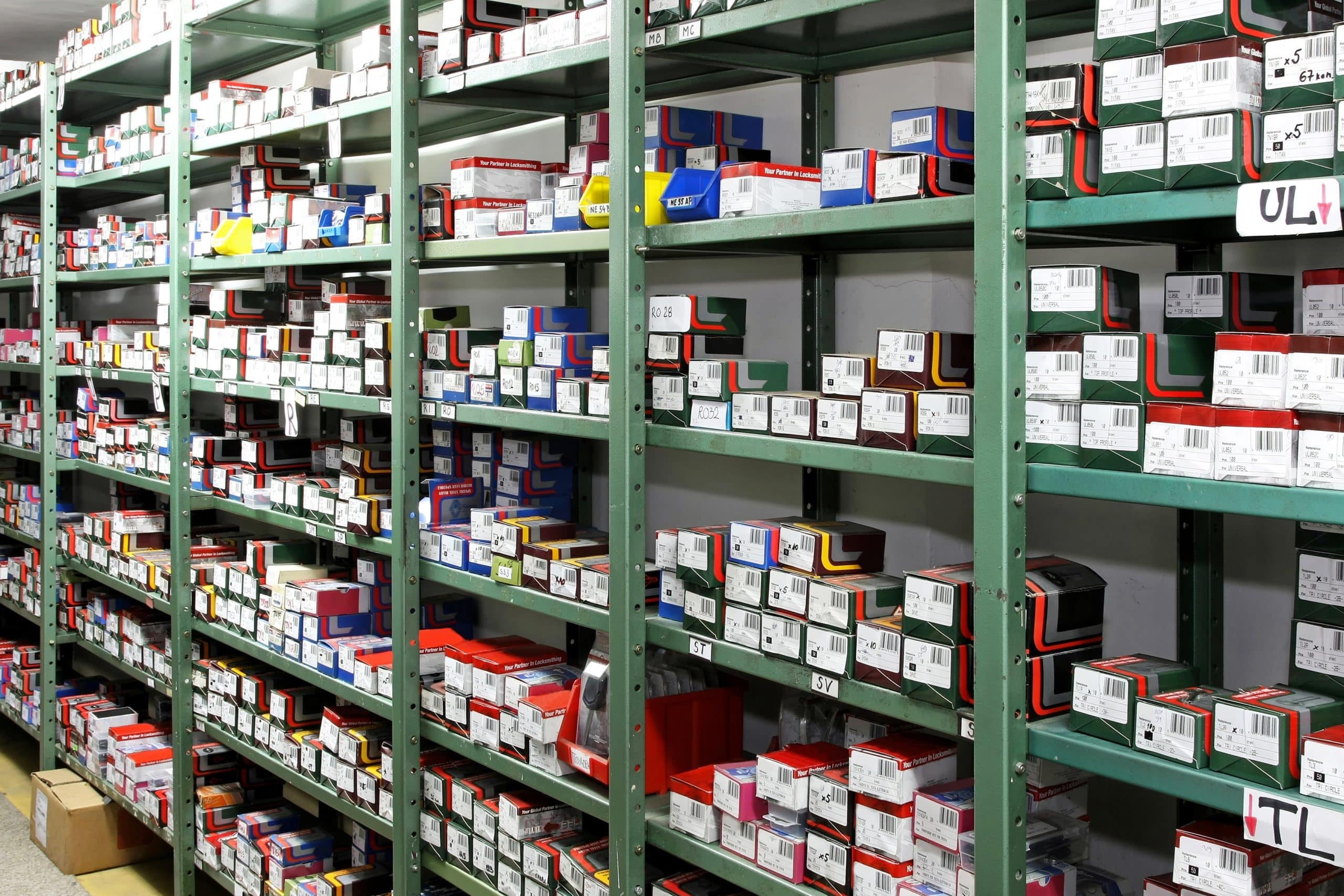
1. Identify your current situation
To best set up your micro fulfillment center, it is important to map out your flow of goods in detail.
- Does your company operate in one large central location or multiple locations?
- What goods are specifically involved (spare parts, consumables, tools, PPE…)?
- Who will have access to your warehouse(s)?
- What is the average stock volume?
- What is the average turnover rate of goods?
2. Choose your ideal location(s)
The location of your new MFC is crucial. Beforehand, ask yourself the following questions:
- Who will be the most frequent visitors to your warehouse: your own technicians, most of your staff, your customers?
- Ideally, will your MFC be located near a service center, on customer premises, in multiple high-demand areas?
- Is the new location accessible 24/7 to authorized profiles? We are happy to support you in the thought process, in software implementation, and in access monitoring via our Telloport eco-system.
- Is everything present to provide the space with electricity, network connection, and security?
3. How far will you go in automating your distribution?
We could almost literally inundate you with technologies and automation systems in which Telloport’s smart software plays a central role. But our software excels only when coupled with smart infrastructure on site. That’s why we’re asking these questions:
- What will you equip your MFC with later: shelves with built-in weight cells, automatic visual identification, access control…?
- Do you need additional conveyor systems, smart lockers, or shelving to deliver the requested items?
- Do you opt for an automated inventory management system that allows you to track and even replenish stocks in real time? And in that case, do you choose tracking by bar code or by RFID?
- Do you wish to connect to smart IoT sensors, such as temperature sensors, smart security hardware…?
- Do you integrate your inventory management with your existing ERP systems?
- Do you also want to provide access via a mobile app on smartphones or other devices?
- …
At Telloport, we can provide you with a lot of these hardware applications. The combination of both components – software and hardware – within the automation process leads to a more efficient distribution of flow of goods. Consequently, from day one from the implementation, your company starts to earn back the investments made. Whichever combination of solutions you choose, we accurately map out that return on investment.
4. How to organize your inventory control?
Now that you know how to automate inventory control in your future micro fulfillment centre, how will you specifically fill in this flow?
- How will you store and replenish your supplies? Will you, for example, enter into a partnership with an outside supplier?
- How often do you replenish your supplies? Will this process be fully automated?
- Who gets access, when, and in what way?
- …
5. Don’t forget security
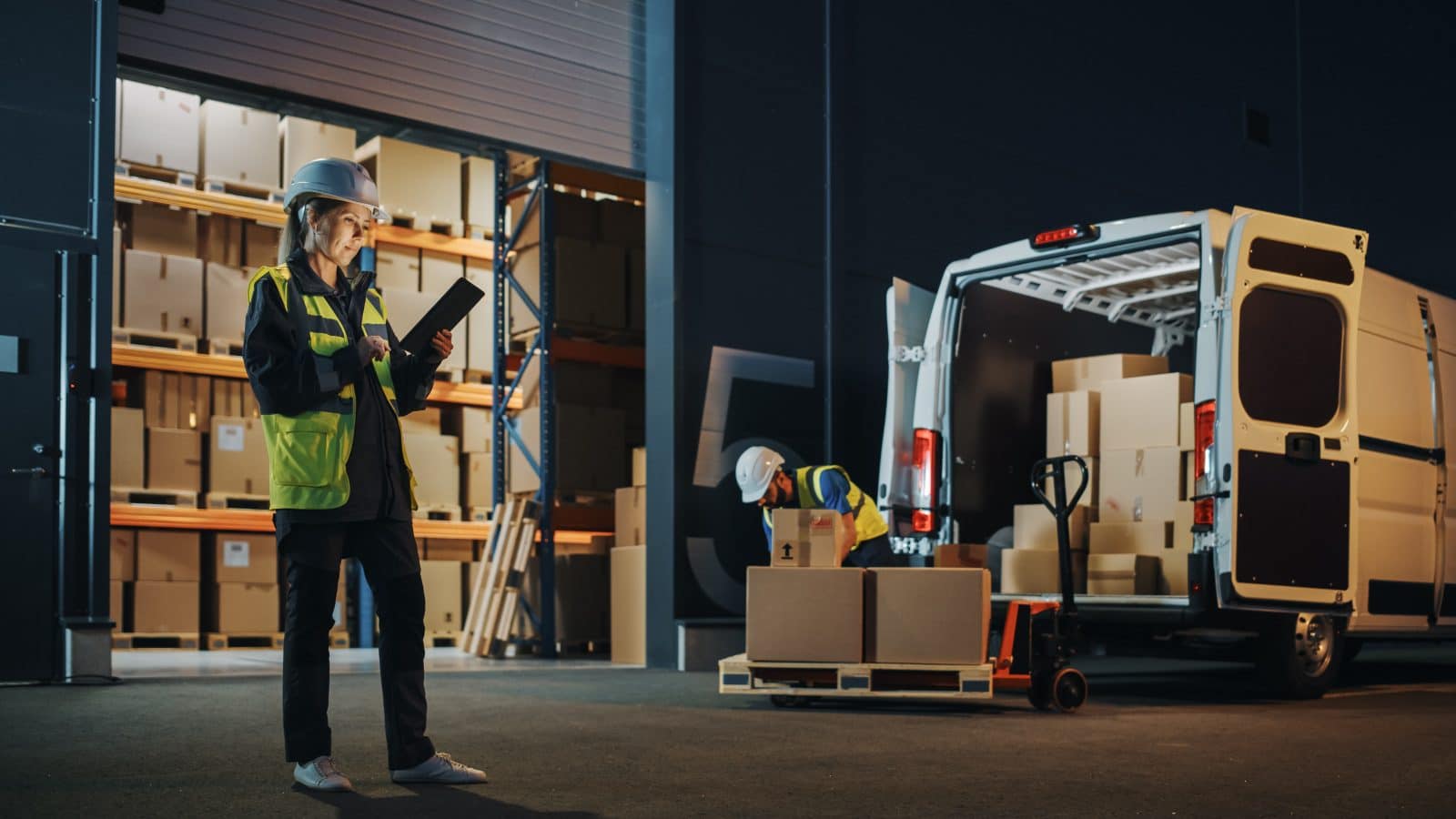
Telloport is a digital ecosystem in which the smart software and hardware aren’t just the visible exponents, but also inextricably linked to our far-reaching service and accompanying quality guarantees.
One of those guarantees is maximum security of stocks in the unmanned warehouse. How can we be of assistance to you?
- Physical security: digital smart locks, CCTV and alarm systems
- Digital security: linking access to specific roles or functions, data encryption, etc.
- Regular inventory audits for optimal accuracy
6. Look beyond the current situation
Today’s flow of goods is only a snapshot.Therefore, look beyond the order of the day. Start thinking about possible expansion possibilities or relocation scenarios… It is better to think about this today, than to be faced with a fait accompli within a few years.
7. Train your staff (with our help)
An unmanned warehouse or micro fulfillment center that keeps running flawlessly cannot do without a knowledgeable set of colleagues. Therefore, consider:
- Who do you want to use as quality controllers or in the case of a possible technical intervention?
- Are you organizing a training course or workshop to explain the system to a broader section of staff?
- …
Good news: our Telloport Care Service is happy to assist you with this!
Why unleash Telloport on your future MFC(s)?
Because we not only put a lot of energy into informing you about the benefits of a smart and automated flow of goods. We also invest that same energy in setting up, guiding and monitoring your future-proof distribution system.
How we can realize those wins for your business? That’s what we prefer to just show you. Request a free demo right away and get ready to take a look at the future.